
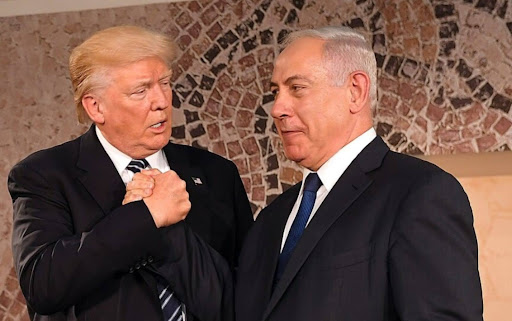
The maxim that “the enemy of my enemy is my friend” has limits — and the US-Israel campaign against Iran is testing those limits in real time. Both governments agree that Iran represents a serious threat. They share a commitment to preventing Iran from becoming a nuclear power. They have significant military complementarity and a history of deep strategic cooperation. All of these shared elements are real and important. But they are not sufficient to overcome the structural divergence in ultimate goals that Director of National Intelligence Tulsi Gabbard confirmed before Congress.
US President Donald Trump wants to prevent a nuclear-armed Iran — a specific and bounded objective. Israeli Prime Minister Benjamin Netanyahu wants to transform the Middle East — a far more expansive vision that potentially includes regime change in Tehran. These two goals are related, but they are not the same war. Conducting them simultaneously, under the banner of a unified alliance, has produced the kind of friction visible in the South Pars gas field episode.
Netanyahu confirmed acting alone on the strike, accepted a narrow limitation in response to Trump’s objection, and maintained his broader operational independence. Trump acknowledged the disagreement publicly, applied limited pressure, and accepted the concession. Senior US officials worked to project unity. The pattern is functional but not frictionless — and the friction has real costs, as the Iranian retaliation and energy price spike demonstrated.
Trump has retreated from regime-change rhetoric, narrowing the gap between stated objectives and realistic outcomes. Netanyahu has maintained a maximalist vision, sustained by strong domestic political support. As long as their definitions of success remain this different, shared enmity toward Iran will be necessary but not sufficient to sustain seamless alliance operations.
The shared enemy keeps the alliance together. But what happens after the shared enemy is weakened — if it is weakened — depends entirely on whether the two governments can agree on what enough looks like. Trump’s “enough” is a non-nuclear Iran. Netanyahu’s “enough” may not exist within a recognizable timeframe. That difference in how far “enough” goes may ultimately be the most consequential divergence in the entire alliance.